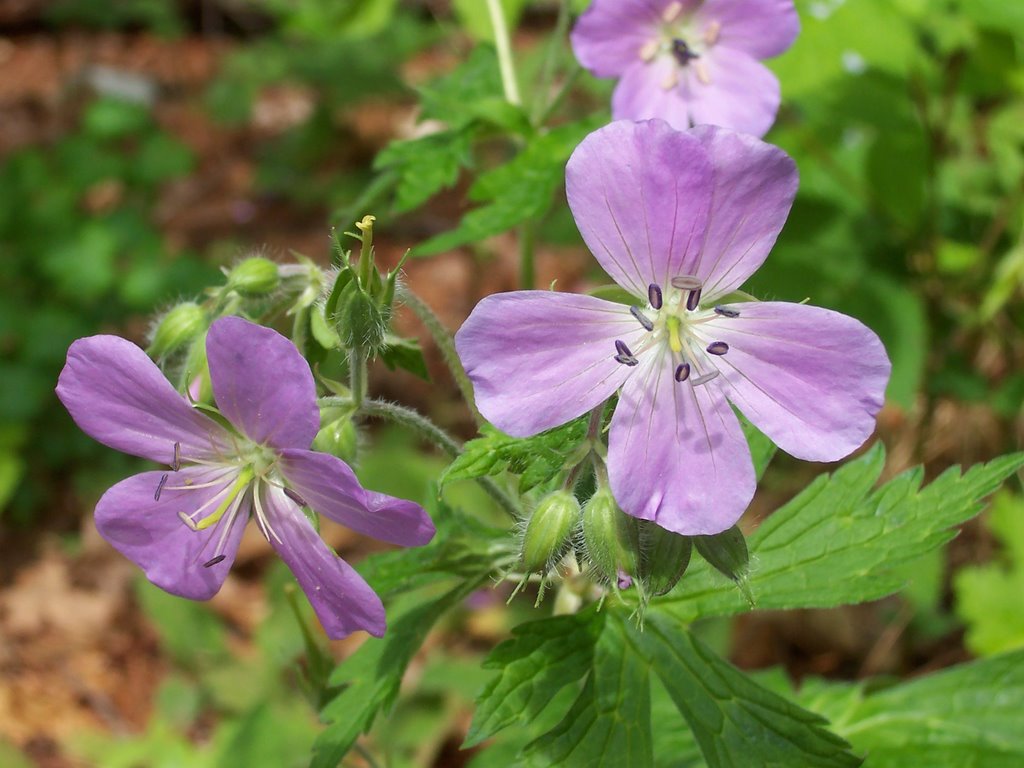
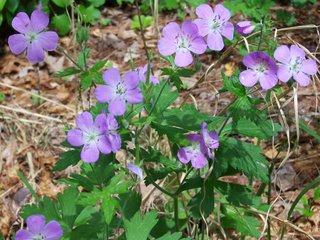
 Image: by D L Ennis, Geranium maculatum
While taking a ride on the Blue Ridge Parkway recently, I was surprised to see wild geraniums growing along the side of the road. I couldn’t believe that I had never noticed them before! A closer look revealed that they were the same variety I have growing in my gardens. They are a beautiful little flower, that when grown in large groupings, provide a magnificent display.
Wild Geraniums are North American woodland plant (
Geranium maculatum) having rose-purple flowers. They are in the same genus as the annual geraniums people grow in pots but are a much hardier perennial. They grow from tough underground rhizomes and can withstand harsh conditions. Indians ground dried rhizomes into powder to stop bleeding and also to make a medicine for sore throats. At a certain stage the unopened fruit looks like a crane's bill, thus the alternate common name "
cranesbill". The flowers open for one or two days. The seeds "pop" from the seed capsule and can fly several yards. They can be manually triggered similar to the way jewel weed can be "popped". The flower has lines on the petals called nectar guides pointing to the center. This supposedly helps pollinating insects find their way to a meal. The flowers progressively go through male and female stages and need a certain kind of wasp to provide transfer the pollen for fertilization.
Color ranges from a very light pink (never white) to magenta. There are said to several additional species not listed here, many of which are annuals or biennials. Flowers of different shades often grow close together.
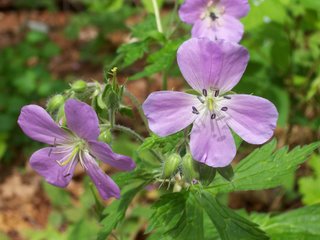 Image right: by D L Ennis, A closer look at the, Geranium maculatum
Wild Geranium prefers drained soil in open woods where partial sun is possible. It also colonizes areas near roads where the soil is clayish and compacted (such as by heavy machinery). It grows in monospecies patches with plants of height of about 12 inches. Each plant produces three to four 5-petaled flowers on a stalk.
They will survive severe disruption and often returns as fast as dandelions to disrupted areas, though it is not so tolerant of being continually chopped down or eradicated as dandelions are. Transplantation has a high rate of success assuming the tall plants are supported artificially in the first year. The pubescent (hairy) leaves and stems are soft and prone to wilting if water is insufficient.
Please, do not harvest any wild plant, most are available from reputable growers. Let’s leave the wild plants where they are for everyone to enjoy, and so they have the opportunity to spread and repopulate!
First posted on
Blue Ridge Gazette.
Technorati Tags: [Blue Ridge Parkway] [Wild Geranium] [Wildflowers][cranesbill]